

Designing in Reverence: Ancient Wisdom, Intuitive Interiors & the Beauty Way
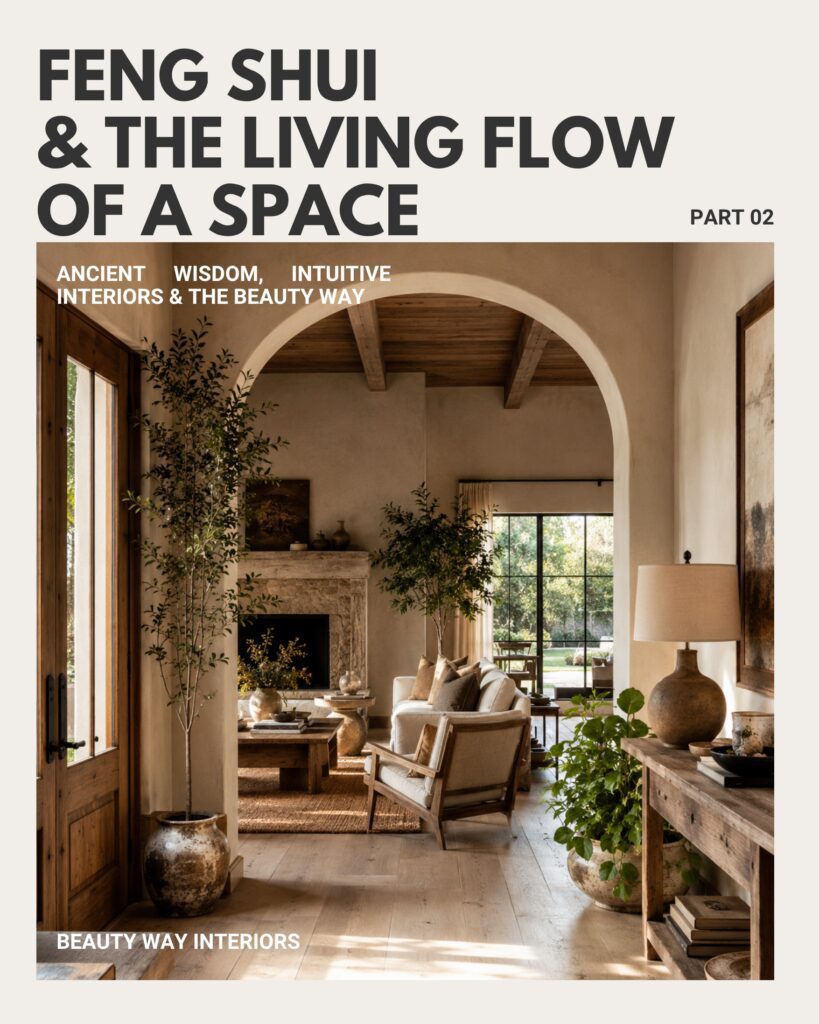
A room has a current.
You may not see it right away, but you can usually feel it. There are spaces that welcome you in with ease. The entry makes sense. The furniture seems to know where it belongs. There is a natural place to sit, a clear path to move through, a window that draws your eye toward light or trees or sky. Nothing feels overly staged, but everything feels considered. The room has a rhythm, and your body knows how to move with it.
You can also feel when that current is interrupted.
A room might look beautiful and still feel difficult to be in. A hallway might feel harsh or rushed. A bedroom might never quite feel restful. A living room might be full of lovely things, yet somehow feel stagnant or unsettled. Sometimes it is obvious: too much clutter, a blocked doorway, furniture that is too large for the space. Other times, it is more subtle. Something about the room asks the body to brace, even if the eye cannot immediately explain why.
This is where Feng Shui enters the conversation.
Feng Shui is an ancient Chinese practice often translated as “wind-water.” It is deeply concerned with the relationship between people and place, and with the movement of qi, or vital life force, through landscapes, buildings, and interiors. It is a rich and complex tradition with many schools, lineages, methods, and levels of study. Like all the traditions in this series, it deserves to be approached with humility and care.
One of the things that feels important to name is that Feng Shui is not practiced in only one way. Different schools and practitioners may work with different methods, levels of formality, and points of emphasis. Some classical approaches pay close attention to the landforms around a building, the direction a structure faces, compass readings, timing, and detailed calculations. Other approaches, especially those more commonly encountered in the West, may use the bagua map as a more accessible tool for reflecting on different areas of life within a home. Some practitioners work very technically, some work more intuitively, and many integrate several layers at once. This is part of why Feng Shui can feel both profound and confusing from the outside; it is not one simple checklist, but a living body of knowledge with multiple ways of being practiced.
Beauty Way does not claim to practice or teach Feng Shui in its formal or complete tradition. I approach it here as a designer reflecting on what Feng Shui reminds us: that space is not passive. The way a home is arranged matters. The way energy enters, gathers, rushes, settles, or becomes blocked matters. Our homes are not simply containers for our lives; they are in constant relationship with us.
I think many of us know this instinctively, even if we do not have language for it. We know the difference between a home that receives us and a home that overwhelms us. We know what it feels like to walk through a cluttered entry and immediately feel behind. We know what it feels like to sit with our back exposed and never fully relax. We know what it feels like when a room has no clear path, when a corner feels forgotten, or when a beautiful object is placed somewhere it cannot breathe.
These things may seem small, but the body is always listening.
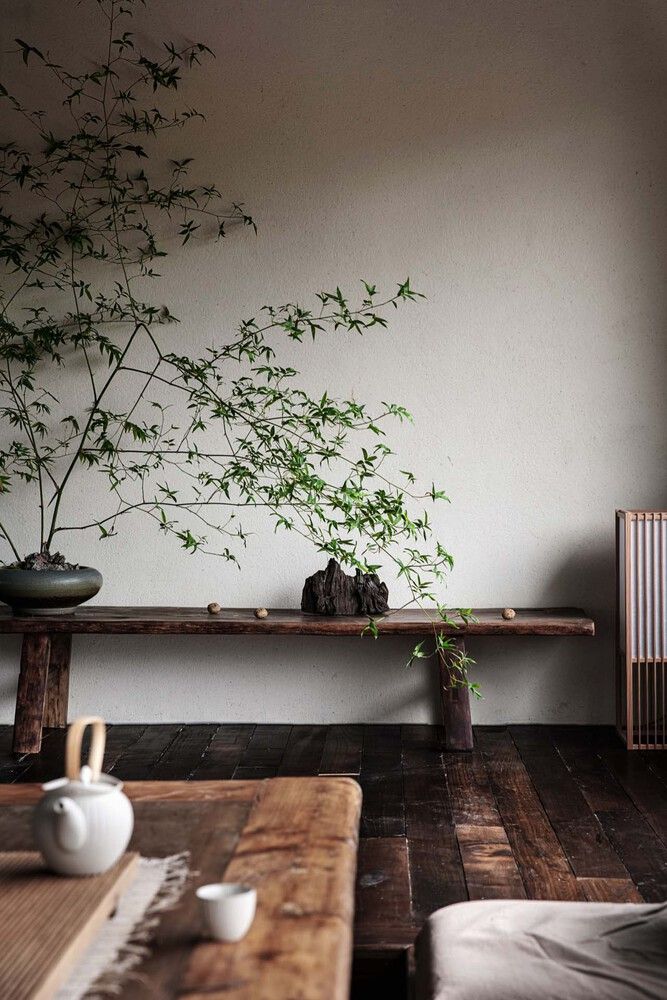
The nervous system is always responding to the environment. It notices whether there is ease or obstruction, whether there is a sense of protection or exposure, whether the eye can rest or is constantly interrupted. A home does not need to be perfect to support us, but it does need to be in some kind of conversation with the life moving through it.
This is one of the reasons Feng Shui feels so important to consider within a series on reverent design. It reminds us that placement is not only visual. It is energetic, emotional, and embodied.
The front door is not just a door. It is the threshold where life enters. A hallway is not just circulation. It shapes the way we move from one state to another. A bedroom is not just where we sleep. It holds the body in its most vulnerable and restorative hours. A dining table is not just furniture. It is a place of nourishment, conversation, offering, and daily ritual.
When we begin to see the home this way, design becomes less about styling and more about relationship.
Instead of asking only, “What should this room look like?” we begin to ask, “How does this room move?” How does energy enter the space? Where does it gather? Where does it feel blocked? Where does the body feel supported? Where does the eye want to rest? Where is there too much pressure, and where is there not enough life?
These kinds of questions ask us to pay attention to the space, how it feels, and how we feel in it.
In Beauty Way design, this kind of attention is essential. Before deciding what a room should become, I want to understand what it already is. I want to notice where the light enters, where the pathways naturally form, where the energy feels heavy, where the space feels too exposed, and where there might be a longing for softness, grounding, movement, or breath.
Sometimes the shift is very practical. Clear the entry. Move the bed. Open the pathway. Add a rug to anchor the room. Soften a sharp corner. Let the window be seen. Remove what is crowding the space. Give one meaningful object room to have presence instead of surrounding it with ten more things.
Other times, the answer is more intuitive. A threshold may need to feel more intentional. A corner may need life. A bedroom may need to feel more protected. A dining table may need to become an invitation again. A room may not need another object at all; it may need space, light, or the relief of being less full.
This is where flow becomes a design language of its own.
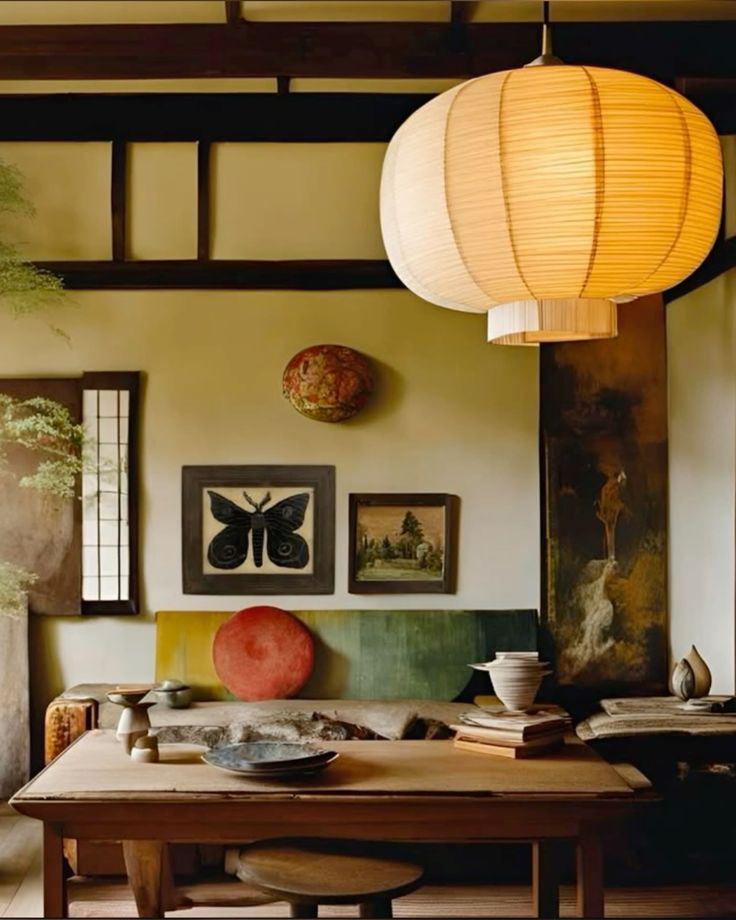
Flow is not the same as emptiness. A room can be layered, soulful, colorful, and full of objects and still have flow. In the same way, a minimal room can feel stagnant if it lacks warmth, meaning, or relationship. What matters is whether the elements of the room are working together in support of the life being lived there.
A room with flow allows the body to move easily. It offers places to pause. It has a sense of welcome and a sense of containment. It gives the eye somewhere beautiful to land without overwhelming it. It supports both movement and rest.
This does not mean a home has to be tidy all the time. I want to be careful with that, because real homes hold real life. There will be shoes by the door, laundry in motion, books on the table, children’s toys, pet hair, half-finished tea, creative projects, mail, dust, and all the evidence of being human. Beauty Way is not interested in turning the home into a controlled image where life is constantly edited out.
The question is not whether a home is always neat.
The question is whether the home can still breathe.
Can you enter with some sense of ease? Can you rest without feeling exposed? Can people gather without feeling crowded? Can daily rituals happen without unnecessary friction? Can beauty be felt in the ordinary movement of life, not only when the room is styled for a photograph?
Feng Shui reminds us to take seriously the invisible quality of a space. The feeling beneath the furniture. The movement beneath the layout. The quiet way a room either supports or interrupts the people who live inside it.
This is especially meaningful in a culture that often treats design as something to be consumed visually. We scroll past images of rooms and decide within seconds whether they are beautiful. But a home is not only seen. It is entered. It is moved through. It is slept in, cooked in, cried in, worked in, gathered in, and returned to at the end of the day.
A beautiful room that does not support the body is not truly beautiful to me.
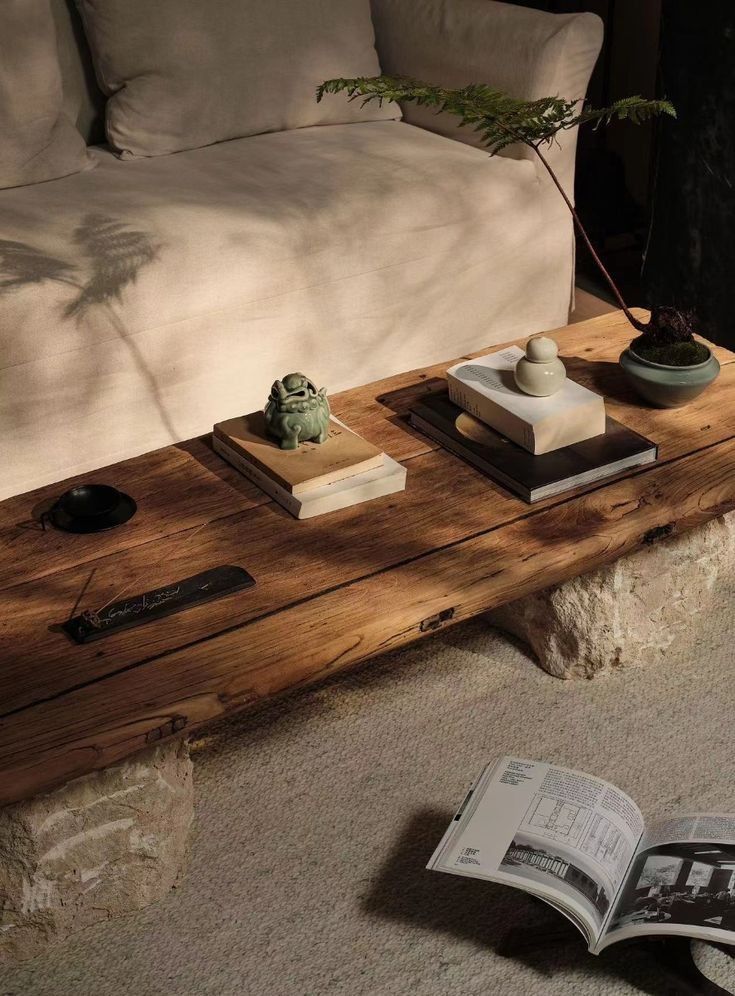
A beautiful room that blocks life, overwhelms the senses, or asks the people inside it to perform is missing something essential. Beauty, in the Beauty Way sense, is not separate from function, feeling, rhythm, or care. It has to be able to hold life.
This is why I often find myself asking, even in small design decisions: does this support the flow of the home, or does it interrupt it? Does this piece belong here, or am I forcing it? Does this arrangement make the room easier to live in? Does the space feel more alive after this choice, or more crowded? Is there enough openness for the room to exhale?
Sometimes the most powerful design choice is not an addition. It is a clearing.
A pathway opened. A chair moved into conversation. A bed turned toward rest. A table simplified. A threshold honored. A window uncovered. A room given permission to breathe.
These are not always dramatic transformations, but they can change the way a home feels.
To design in reverence is to remember that a home is alive with movement, even in stillness. Energy travels through a doorway, gathers around a table, lifts near a window, softens beside a bed, and disappears beneath clutter. We may not always have formal language for what we are sensing, but we feel the difference when a space begins to move with more ease.
Feng Shui, in its own ancient and deeply rooted tradition, invites us to remember that harmony is cultivated through attention. Through orientation. Through respect for what enters, what exits, what gathers, and what flows.
Beauty Way receives that reminder with humility. I do not approach Feng Shui as a system to claim or a checklist to flatten, but as an invitation to listen more closely to the living current of a space.
To notice where beauty wants to move. To honor the subtle forces that shape how a home feels. To arrange our interiors with enough care that life can move through them with more ease, support, and belonging.
A home, when tended this way, becomes more than a collection of objects.
It becomes a place that welcomes.
A place that protects.
A place that restores.
A place where energy is not trapped beneath excess or rushed through without care, but welcomed, softened, and allowed to flow.
This is the living flow of a space.
And this is what Feng Shui invites us to remember.
If this tradition speaks to you, I encourage you to continue learning from trained Feng Shui practitioners, teachers, and lineage-holders who can offer the depth, nuance, and cultural context that a reflection like this can only gesture toward. Let this be a doorway, not a substitute for deeper study.
If this way of approaching home speaks to you, I’d love to support you in creating a space that feels soulful, functional, and deeply personal. Beauty Way offers holistic, sustainable, and bespoke interior styling and design services rooted in beauty, intention, and care for the earth.
Book a consultation to begin creating a home that feels more aligned with you and the way you want to live. Connect here <3


