
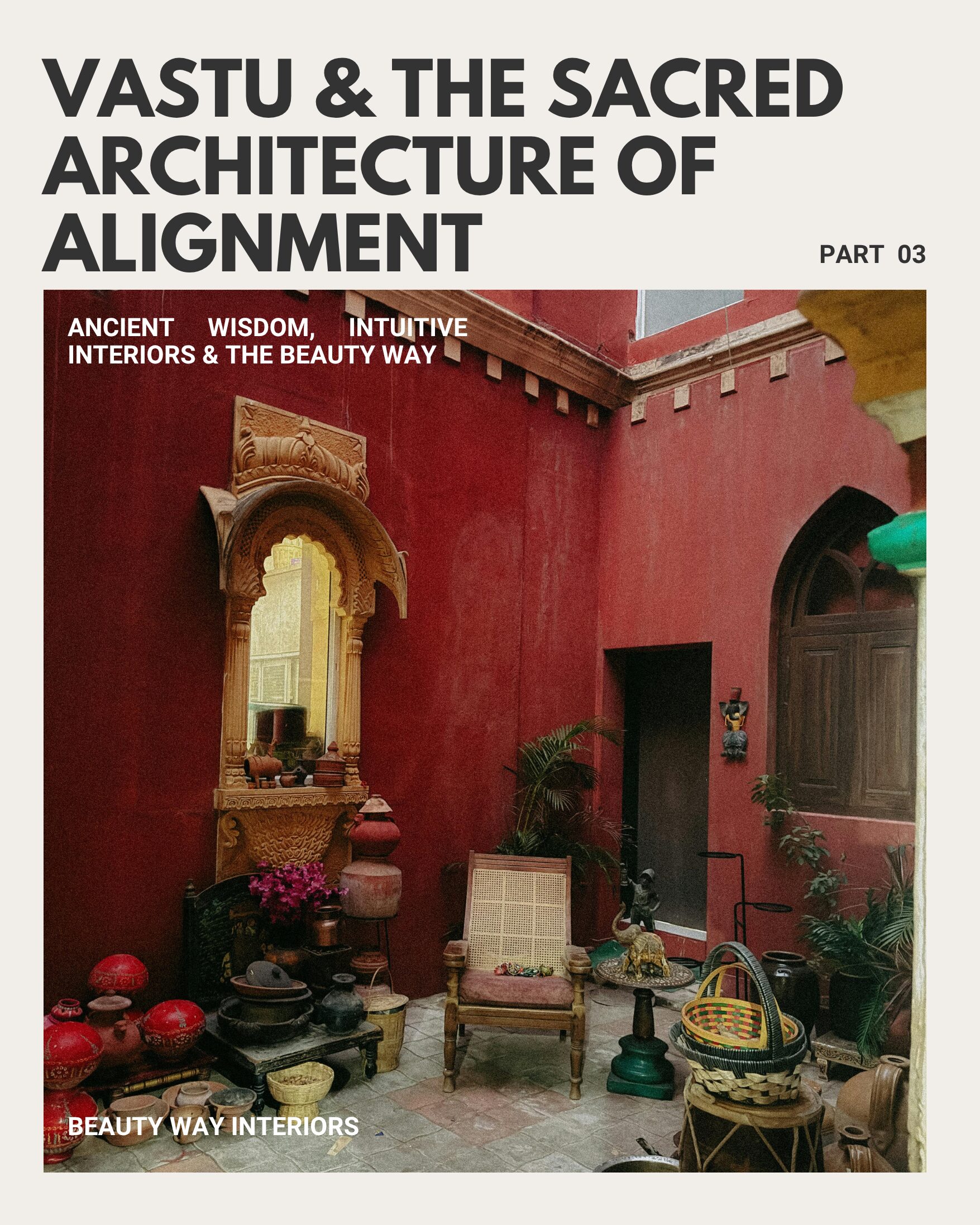

Designing in Reverence: Ancient Wisdom, Intuitive Interiors & the Beauty Way

A home has an orientation.
I mean this in the practical sense, of course. A home has a front door, windows, walls, rooms, thresholds, directions. It receives morning light in one place and afternoon heat in another. It has areas that feel open and areas that feel protected. It has corners that gather weight, pathways that shape movement, and rooms that seem to know whether they want to be active or quiet.
But I also mean orientation in a deeper sense.
A home has a way it meets the world. It is in relationship with the sun, the wind, the land, the elements, the seasons, the sky above it, and the earth beneath it. Before a room is styled, before a color is chosen, before anything is added, there is already a conversation happening between the structure and the natural forces around it.
This is where Vastu enters the conversation: as an ancient Indian architectural tradition that reminds us that building itself can be sacred. Rather than approaching it as a trend or simplified design formula, and while Beauty Way does not claim Vastu as its own practice, I want to honor it as a deeply rooted system of relationship between architecture, nature, direction, proportion, and harmony.
Vastu Shastra is a traditional Indian system of architecture and design rooted in ancient texts that address principles such as layout, measurement, ground preparation, space arrangement, and spatial geometry. It is often described as seeking to integrate architecture with nature, function, symmetry, directional alignment, and natural forces such as sunlight and wind.
At its deepest level, Vastu invites us to consider the built environment as part of a larger earthly and cosmic order. A home is not separate from nature. A room is not separate from direction. A doorway is not separate from the energy it receives. A building is not only a structure; it is a meeting place between body, land, element, and sky.
Like Feng Shui, Vastu is not practiced or interpreted in only one way. There are traditional texts, architectural lineages, temple and town-planning applications, domestic applications, contemporary consultants, spiritual interpretations, and modern adaptations. Some people approach Vastu through detailed directionality, measurements, grids, and room placement. Others engage it more broadly as a way of thinking about harmony between structure, nature, light, air, function, and human wellbeing. Even within conversations about Vastu, there are debates around what belongs to ancient architectural methodology, what has become modern consultancy, and where cultural, spiritual, practical, and commercial interpretations diverge.
This complexity is part of why I want to approach it carefully. Vastu is not something I can reduce to a list of “where to put your bed” or “which direction your kitchen should face.” It is a rich and culturally specific system with roots in Indian architecture, philosophy, spirituality, and traditional knowledge. Beauty Way does not claim to practice or teach Vastu Shastra in its formal, sacred, or complete tradition. I approach it here as a designer reflecting on what Vastu reminds us: that architecture has consequence, that orientation matters, and that our homes are shaped by forces much larger than personal taste.
In much of modern Western design, we often begin with style. We ask what colors we like, what furniture we need, what mood board feels inspiring, what aesthetic we are drawn to. These can be useful questions, but they are not the only questions.
Vastu asks us to begin earlier, with the conditions of the place itself. Where does the sun rise? How does light move through the home? Where does heat gather? Where does air circulate? What direction does the home face? Where is there openness, and where is there weight? Where does the body feel supported, and where does it feel unsettled?
These questions move design beyond decoration and into alignment.
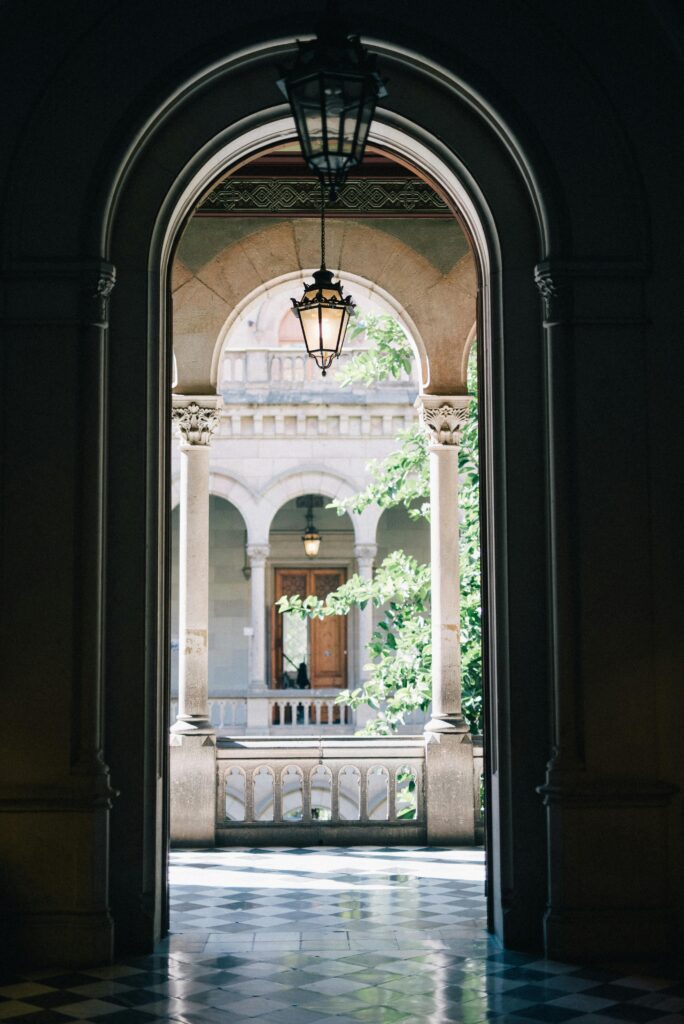
They remind us that a home is not an isolated object. It belongs to the land it sits on. It responds to the climate, the seasons, the cardinal directions, the movement of the sun, the quality of the air, and the bodies of the people who live within it.
This is one of the reasons I find Vastu so compelling in conversation with Beauty Way design. Not because I am trained in its formal practice, but because it affirms something I feel deeply: a home should not be imposed upon the earth. It should be in relationship with it.
Modern design often asks nature to become part of the aesthetic. We bring in a plant to soften the room. We choose natural materials because they photograph beautifully. We add sunlight to the mood board. We frame the view. These things can be lovely, but Vastu reminds us that nature is not an accessory to design. Nature is the original architecture.
The sun is not a styling element. It is a force. The wind is not a background detail. It is movement. The earth is not merely a foundation. It is support. The directions orient us. The center of a space can hold presence. The proportions of a room can shape how we feel long before anything decorative is added.
This changes how we approach a home.
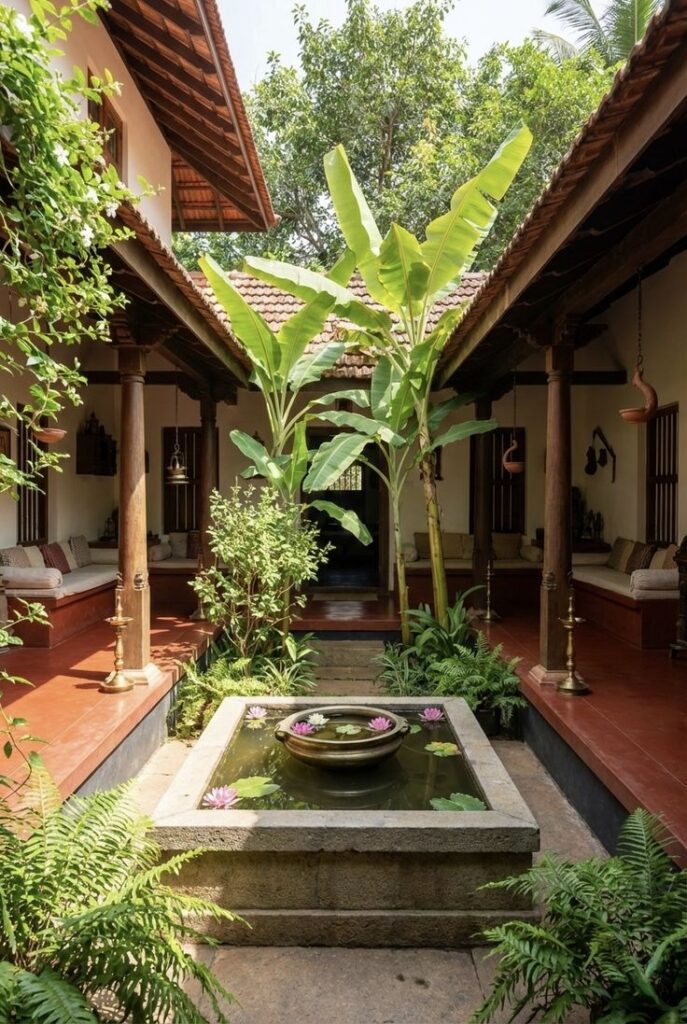
A window becomes more than a view; it becomes a relationship with light. A doorway becomes more than access; it becomes a point of arrival and exchange. A kitchen becomes more than a functional zone; it becomes a place of nourishment, heat, transformation, and care. A bedroom becomes more than a place to sleep; it becomes a field for restoration, intimacy, and protection. A courtyard, when present, becomes more than empty space; it becomes breath.
Vastu reminds us to think architecturally, not just decoratively. It asks us to consider the bones of a space: the placement, the proportion, the openness, the grounding, the relationship between heavy and light, active and quiet, inner and outer, built and natural.
And even when we are not building from the ground up, even when we are working with an existing apartment, a rental, a client’s family home, a small studio, or a space with constraints, these questions still matter. Alignment is not only achieved through ideal architecture. It can also be approached through attention.
We can notice where a room feels too heavy. We can honor morning light instead of blocking it. We can let the center of a room breathe. We can create a threshold that feels intentional. We can ground a restless space. We can arrange furniture so the body feels supported rather than scattered. We can allow the architecture to tell us what it is asking for, instead of forcing it to perform someone else’s idea of beauty.
This is where Beauty Way meets the spirit of this conversation.
Beauty Way design begins with reverence for what already exists. The direction of the windows. The way afternoon light pools on the floor. The architectural quirks. The strange little corners. The low ceiling that asks for intimacy. The tall wall that asks for grounding. The old wood that carries memory. The plaster that catches shadow. The view that wants to be honored.
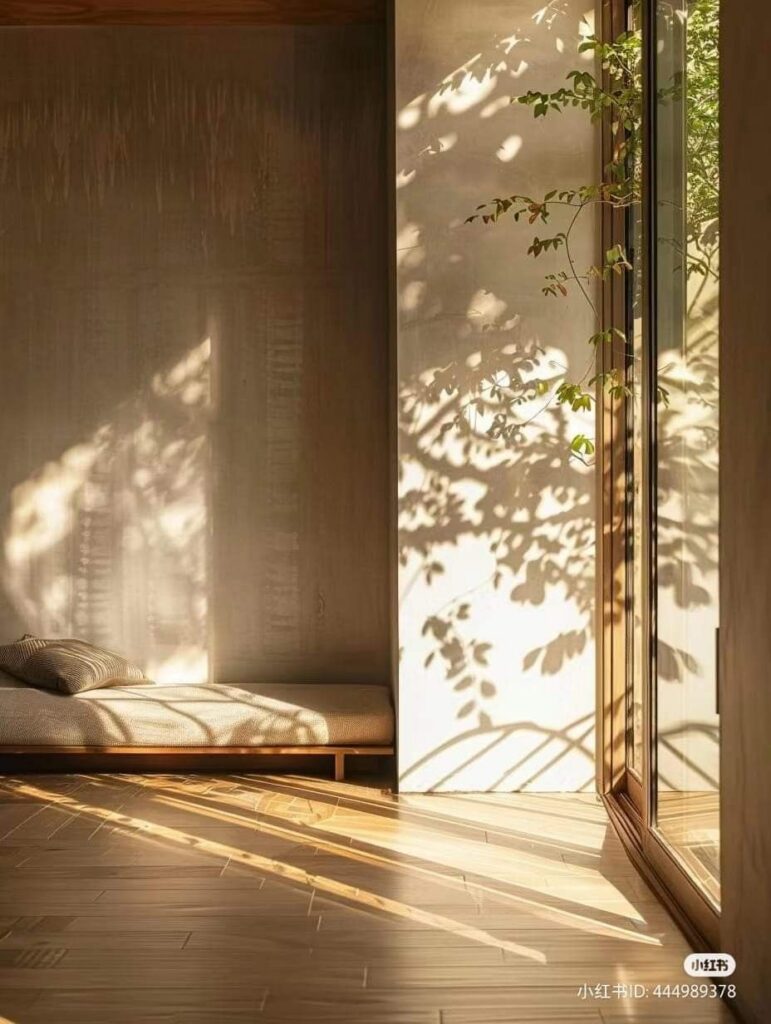
A room is rarely a blank canvas, and I do not want to treat it like one. Every space already has a nature. It has limitations, but it also has invitations. Sometimes the work is less about transforming a room into something else and more about helping it become more fully itself.
So instead of beginning with, “How do we make this space look like the inspiration image?” Beauty Way begins with different questions.
What is this space already in relationship with? What does the light want to reveal? What does the architecture want to support? Where does the home feel grounded? Where does it feel unsettled? Where is the natural gathering place? Where does the room want openness? Where can beauty align more honestly with function, ritual, and rest?
These questions are not rigid. They are relational.
They help us notice whether a space supports the life it is meant to hold. A desk facing the wrong way may make work feel strained. A bedroom with no sense of protection may make sleep feel shallow. A living room with too much weight in one area may feel imbalanced. A dining space without warmth may fail to invite gathering. A beautiful room with no relationship to natural light may feel strangely lifeless.
When a home feels misaligned, we often feel it before we can explain it.
Alignment is not perfection. It is not symmetry for symmetry’s sake. It is not about making every home grand, custom, or architecturally ideal. A home in alignment might be a small room with morning light and a clear place to sit. It might be a bedroom where the bed finally feels held. A kitchen where nourishment feels easier. A hallway that no longer feels forgotten. A dining table that invites people to linger. A window that is no longer blocked. A center that is no longer cluttered. A threshold that feels like arrival.
This is the kind of alignment Beauty Way listens for.
In practice, this often means choosing fewer things with greater intention. It means honoring natural materials not only because they are beautiful, but because they connect us back to earth. It means allowing sunlight to participate in the design. It means creating rooms that support the rituals of daily life: preparing food, drinking tea, resting, bathing, gathering, creating, grieving, celebrating.
It means understanding that the way a space is arranged can either fragment our attention or help bring us back into coherence.
A home does not have to be perfect to be aligned. It does not need to be built according to sacred geometry. It does not need to follow a formal system in order to become more supportive, more grounded, or more alive. But it does ask us to pay attention to the relationship between structure and life, between beauty and function, between the human body and the natural world.
Vastu, in its own ancient and sacred language, reminds us that design begins before decoration. It begins with orientation, land, light, proportion, and the seen and unseen forces that shape how a place feels. It reminds us that to build, arrange, or inhabit a space is to enter into relationship with the world.
And perhaps this is one of the teachings modern interiors most need to remember: a home is not just something we make beautiful. A home is something we align with. Something we listen to. Something we tend. Something we allow to belong to the earth, even as it shelters us from it.
If Vastu speaks to you, I encourage you to learn from trained Vastu practitioners, scholars, architects, and teachers who can offer the depth, nuance, and cultural context that a reflection like this can only gesture toward. Let this be a doorway, not a substitute for deeper study.
Beauty Way receives the reminder of Vastu with humility. Not as a system to claim or simplify, but as an invitation to notice the forces already present in a space: light, direction, air, weight, openness, proportion, ritual, and belonging.
Through this lens, design becomes less about imposing beauty and more about revealing harmony. A home becomes a vessel for daily life, a compass for the body, a shelter for the spirit, and a sacred arrangement of light, matter, memory, function, and care.
This is the sacred architecture of alignment.
And this is what Vastu invites us to remember.
If this way of approaching home speaks to you, I’d love to support you in creating a space that feels soulful, functional, and deeply personal. Beauty Way offers holistic, sustainable, and bespoke interior styling and design services rooted in beauty, intention, and care for the earth.
Book a consultation to begin creating a home that feels more aligned with you and the way you want to live.


