
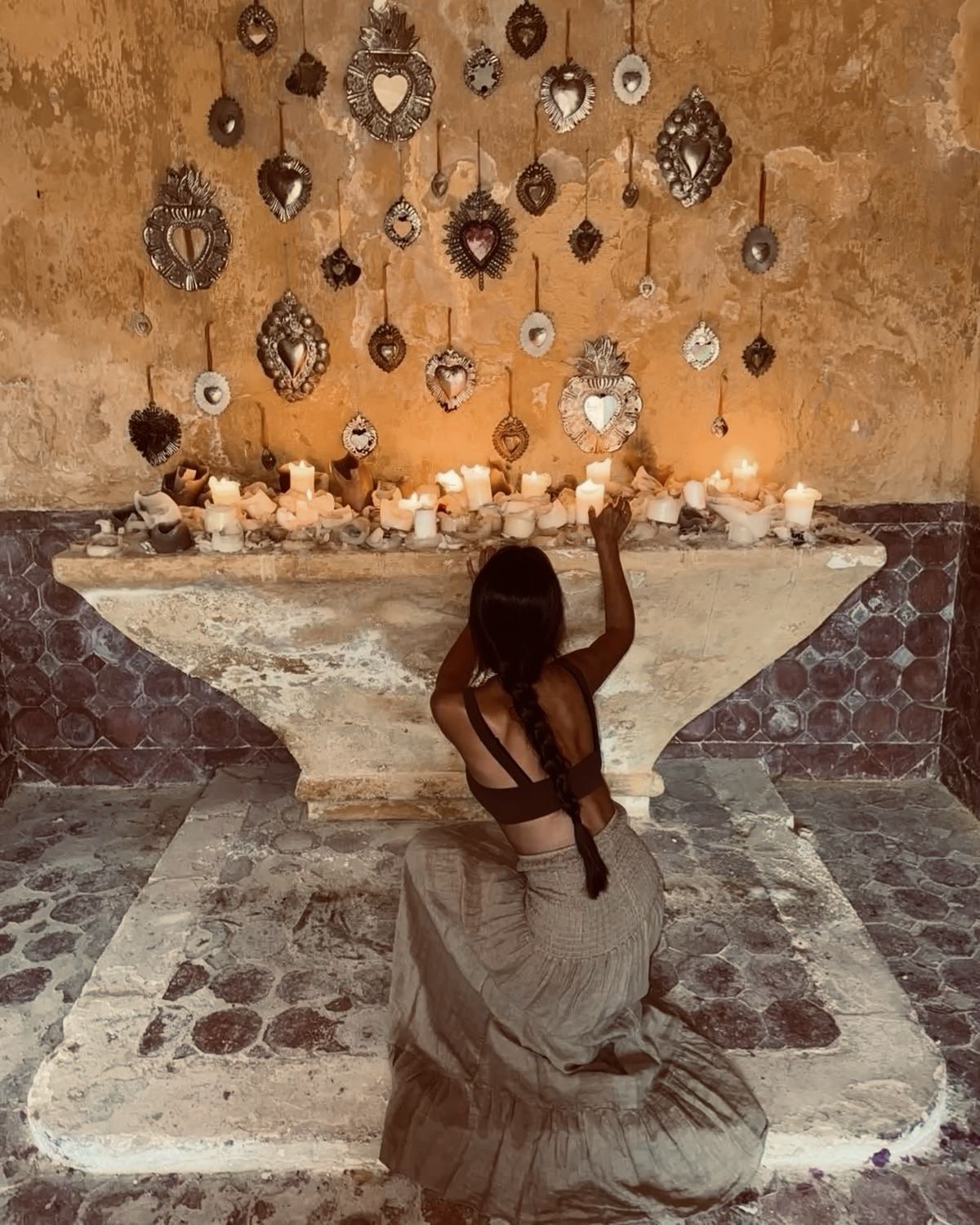

Ancient Wisdom, Intuitive Interiors & the Beauty Way
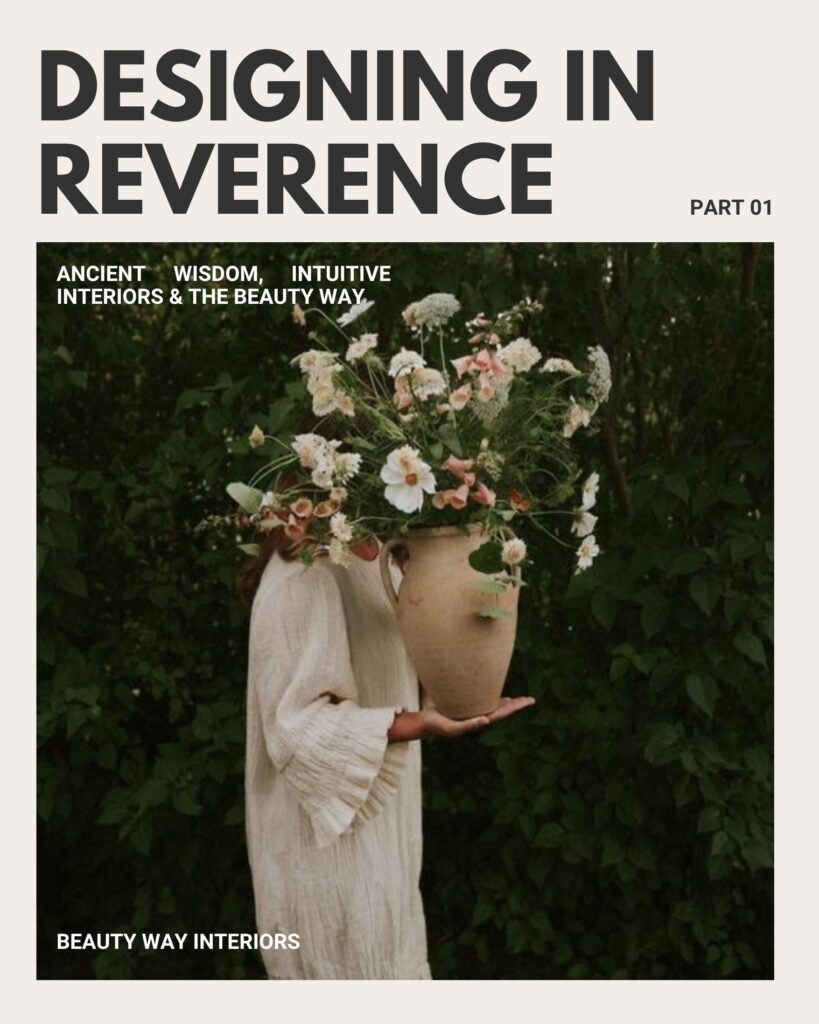
There are certain spaces that feel alive.
Not simply decorated. Not merely styled. Alive. Inviting. Embracing. Inspiring.
You enter and feel it immediately — a mood, a pulse, a presence. The space seems to have a character of its own. Maybe it is soft and grounding, maybe it is wild and expressive, maybe it is quiet, sensual, storied, or strange. The room does not perform beauty; it emanates it.
This is the kind of design I am devoted to.
Through Beauty Way, I am interested in interiors as more than aesthetics. I am interested in the home as a living relationship — a conversation between the body, the spirit, the earth, the elements, the architecture, the objects, and the daily rituals that shape a life.
A home is not just a place to arrange furniture. It is where we rest, gather, grieve, nourish, create, pray, make coffee, fold laundry, burn dinner, start over, and become ourselves again and again. It is where the inner life meets the material world. It is where values either become visible or get forgotten beneath the pace of modern living.
This series begins with a question I return to often in my work:
What does it mean to design in reverence?
Not just to make a room beautiful, but to make it meaningful. Not just to style a space, but to listen to it. Not just to bring more things into a home, but to ask what kind of relationship those things create — with the people who live there, the hands that made them, the land they came from, and the life they are meant to support.
Over the course of this series, I will be reflecting on Feng Shui, Vastu, Wabi-Sabi, Wu Wei, the Tao, and Hózhó. Each of these traditions and philosophies offers a distinct way of understanding beauty, place, energy, nature, harmony, impermanence, alignment, and right relationship.
Feng Shui invites us to consider the living flow of a space and the way energy moves through a home.
Vastu reminds us that architecture begins with orientation, land, light, direction, proportion, and sacred alignment.
Wabi-Sabi asks us to soften our relationship to imperfection, age, patina, and time.
Wu Wei and the Tao invite us to stop forcing beauty and begin listening for the natural way of a space.
Hózhó reminds us that beauty is not only something we see. It is something we live.
These systems are not interchangeable, and they are not simply aesthetics to borrow from. They come from specific cultures, lineages, languages, histories, cosmologies, and lived traditions. They carry depth far beyond what can be held in a design essay, and certainly far beyond what can be reduced into a mood board, trend, or checklist.
I want to be very clear about that from the beginning.
As a white woman of European descent, I do not come to these traditions as an authority. Beauty Way does not claim to practice Feng Shui, Vastu, Taoism, Wabi-Sabi, or Hózhó in their formal, sacred, or complete cultural contexts. I am not here to teach these systems, translate them fully, or use them as decorative language.
I come as a student of beauty.
A listener.
A designer trying to understand what these traditions, from their own places of origin and depth, remind us about living in better relationship with the spaces we inhabit.
This series is not a guide to mastery. It is an offering of reverence. It is a way of looking toward ancient wisdom with respect, while also being honest about the limits of my own perspective. When a tradition speaks to you, I hope this series encourages you to learn more from trained practitioners, scholars, artists, teachers, craftspeople, and lineage-holders who can offer the depth and cultural context that these reflections can only gesture toward.
Let this series be a doorway, not a substitute for deeper study.
What I can speak to is Beauty Way’s own approach to design, and the way these traditions have helped me ask better questions.
In modern Western interiors, we are often taught to begin with style. We ask whether a space is minimalist, maximalist, modern, traditional, bohemian, organic, coastal, contemporary, or collected. These categories can be useful. They can help us communicate, organize inspiration, and understand what we are drawn to. But they can also flatten the deeper purpose of a home.
When design becomes only about style, beauty can become performance. A room can become something to prove, photograph, and consume. The home can become another place where we are asked to keep up, replace, perfect, and present ourselves in a certain way.
But a home is not a showroom.
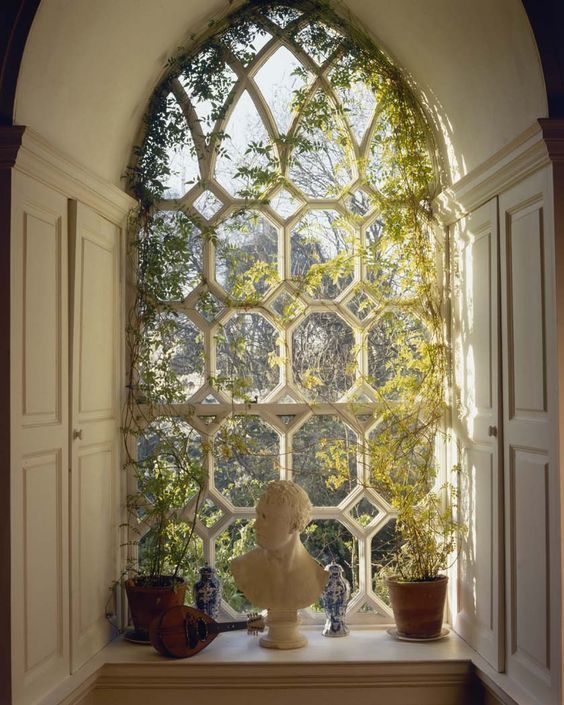
A home is a living field.
It is shaped by light, memory, movement, scent, sound, touch, weather, clutter, grief, laughter, rest, care, and repetition. It is shaped by the objects we keep and the objects we release. It is shaped by what we choose to repair, what we allow to age, what we buy, what we inherit, what we make sacred through daily use.
So the question becomes less, “What should this space look like?” and more, “How should this space feel, function, and support the life inside it?”
What is this home asking for?
Where does the space need grounding, softness, movement, or breath?
What wants to stay?
What wants to be released?
What already carries meaning?
Where is beauty asking us to come back into relationship?
These are the questions that guide Beauty Way.
Beauty Way design is intuitive, sensory, earth-centered, and relational. It does not begin by imposing a style onto a space. It begins by listening. Listening to the architecture, the light, the materials, the land, the people, the rituals, and the quiet intelligence of the body.
This kind of design asks us to pay attention to what is already present before reaching for what is new. It asks us to consider whether an object is beautiful only in appearance, or whether it also carries integrity, usefulness, story, and care. It asks us to honor natural materials, handmade objects, vintage and antique pieces, local artisans, ancestral craft, and the wisdom of what already exists.
It also asks us to be honest about consumption.
A beautiful home is not made more beautiful by endless accumulation. Sometimes the most reverent choice is to repair. Sometimes it is to keep the old table. Sometimes it is to wait for the right piece. Sometimes it is to clear the entry, uncover the window, move the chair, or let the room breathe.
Beauty Way is not interested in perfection. I do not want my clients reaching for a flawless image of home. I want them reaching for a home that can hold real life — the kind of life where the floor gets scuffed, the candles burn down, the kitchen smells like dinner, the books pile up, and the most beloved objects become worn from use.
There is beauty in that.
There is also responsibility.
Because the way we design our homes is connected to the way we live on the earth. Every material comes from somewhere. Every object carries a story of labor, extraction, craft, transport, use, and eventual return or refusal to return to the earth. This does not mean we must approach design through purity or perfection. That would only create another impossible standard. But it does mean our choices matter.
Care matters. Attention matters. Keeping what still has life matters.
Choosing fewer, better, older, handmade, local, natural, or more ethical things matters when that choice is available to us.
Creating beauty with what we already have matters.
This is why I believe design can be a spiritual and ecological practice, even when it is also practical and deeply human. The home is where values become embodied in ordinary ways. Through the chair we keep, the material we choose, the artist we support, the table we gather around, the corner we turn into an altar, the window we stop blocking, the ritual we make space for.
Design, at its best, can help us remember how we want to live.
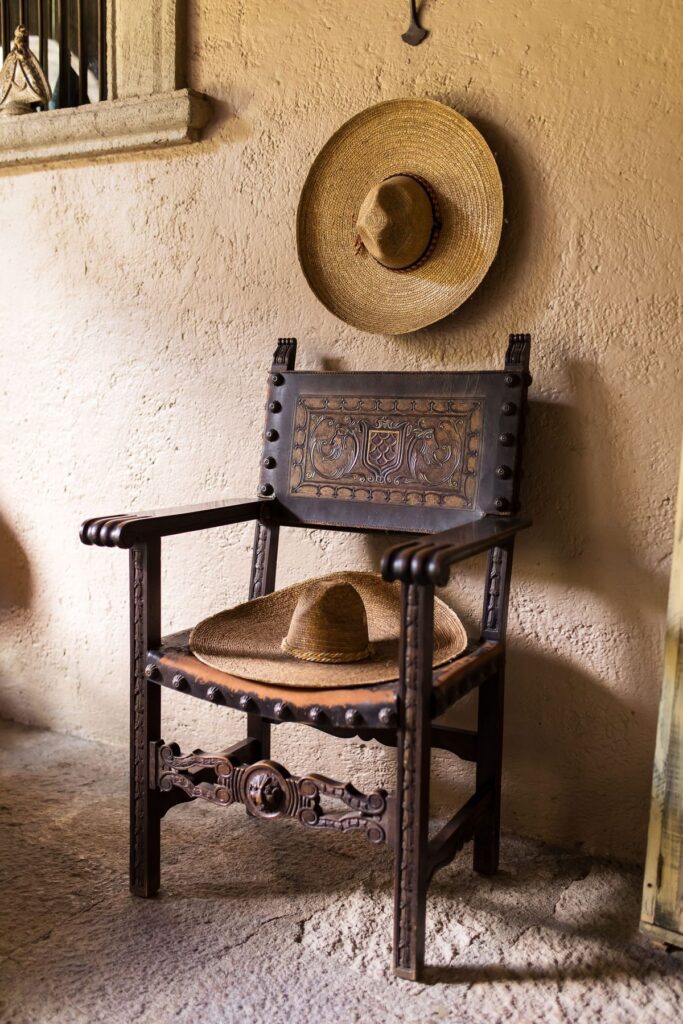
That is what I hear across the traditions explored in this series. Not sameness, and not a single universal teaching, but a shared invitation to look beyond the surface. To remember that beauty is not separate from balance. That a room is not separate from the earth. That materials are not separate from time. That ease cannot always be forced. That home can become a place where relationship is restored.
In the Beauty Way, a home is not simply arranged to look beautiful. It is tended as a place where objects can carry story, where imperfection can belong, where rituals are supported, where the natural world is remembered, and where beauty becomes part of daily practice.
This is the beginning of the series.
An exploration of ancient wisdom, intuitive interiors, and the Beauty Way.
An invitation to design with more humility, more attention, more care, and more reverence.
Not to master what is not ours.
But to listen more deeply.
To honor the traditions that remind us there are older, wiser ways of relating to place.
And to ask, again and again, how our homes might help us live more beautifully.
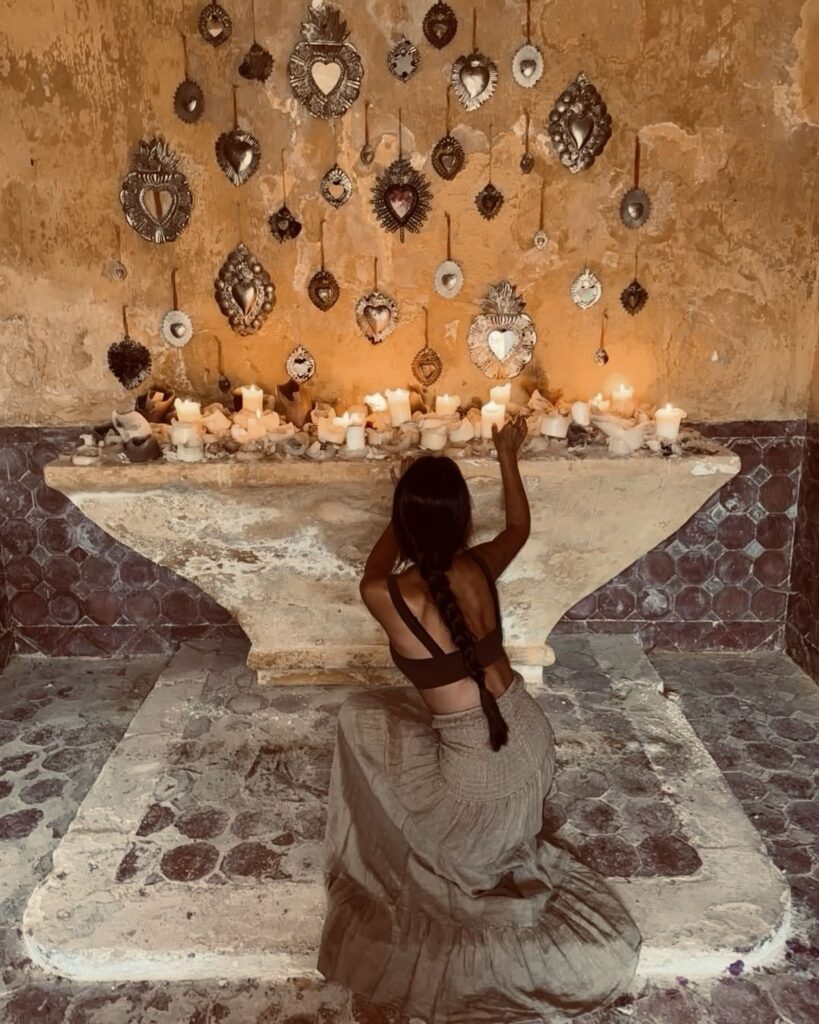
If this way of approaching home speaks to you, I’d love to support you in creating a space that feels soulful, functional, and deeply personal. Beauty Way offers holistic, sustainable, and bespoke interior styling and design services rooted in beauty, intention, and care for the earth.
Book a consultation to begin creating a home that feels more aligned with you and the way you want to live. Let’s Connect <3


